
Compact cylinders Series 31
Double and single-acting, double-acting non-rotating, magnetic
Ø 12, 16, 20, 25 mm
Ø 32, 40, 50, 63, 80, 100 mm UNITOP
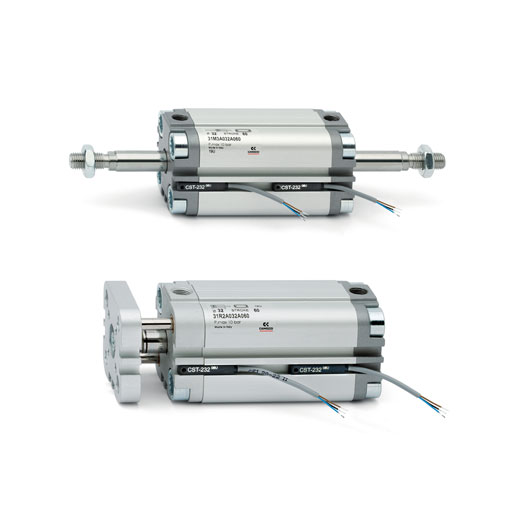
The compact dimensions allow Series 31 single and double-acting magnetic cylinders to be installed within confined spaces.
These cylinders are suitable for use with feet, brackets.These cylinders are available in 10 different bore sizes from Ø12 to Ø100.
The guides are inserted in the external profile parallel to the sliding axis on three sides.
These guides are used to locate the switches that sense the piston position.
The construction design of these cylinders provides excellent axis stability.
They are available either with a male or female thread.
These cylinders can be supplied in W version for high temperatures (140°C).
This last version is not magnetic.
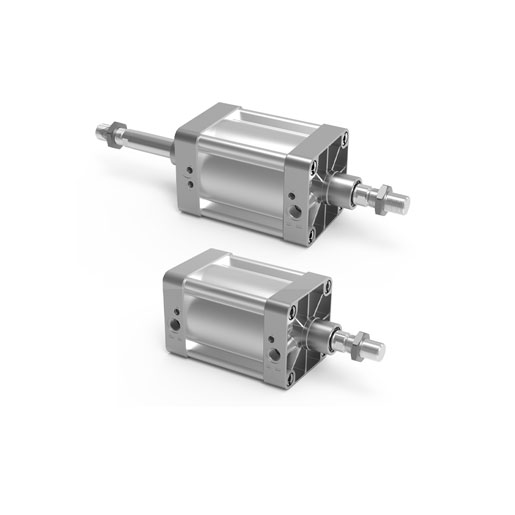
Cylinders aluminium profile Series 41K
Double-acting, cushioned, magnetic Ø 160 - 200 mm
Series 41K cylinder comply with the ISO 15552 standard and can be assembled with the entire range of standard accessories.
The mounting brackets used on the end-blocks tube are designed in an extremely secure way, making use of cylinder tie-rods positioned internally and not visible on the assembled cylinder.
This cylinder series is normally equipped with adjustable endstroke cushioning by means of a screw positioned on the end-block.
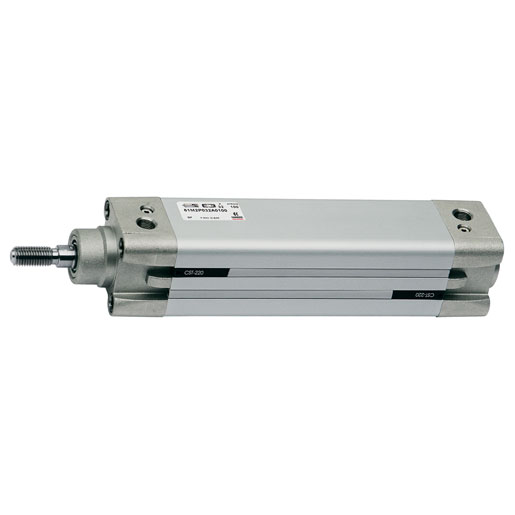
Cylinders Aluminium profile Series 61
Single and double-acting, magnetic, cushioned
Standard, low friction, low temperatures and tandem versions
Ø 32, 40, 50, 63, 80, 100, 125 mm
Series 61 cylinders comply with the ISO 15552 standards and can be assembled with the entire range of standard accessories.
A permanent magnet, mounted on the piston in these cylinders, enables information to be received regarding the piston position by means of proximity switches mounted in grooves along the cylinder profile.
These grooves can be covered with a slot cover profile.This cylinder series is equipped with adjustable end-stroke cushioning.
Moreover, they are equipped with a mechanical cushioning in order to reduce the impact of the piston as it reaches the end of the stroke.
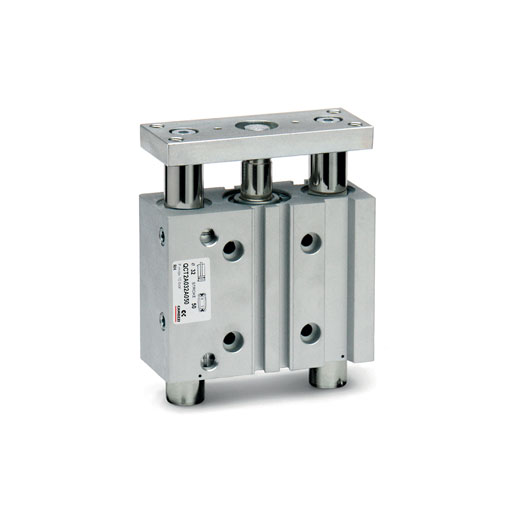
Cylinders with integrated guide Series QC
Double-acting, magnetic piston, guided
ø 20, 25, 32, 40, 50, 63 mm
These actuators, suitable for use in very limited space, are available in two versions.
- QCT version: with sintered bronze bushes, suitable when the side loads applied to the cylinder are high.
- QCB version: with linear ball bearings, suitable for high precision and fast cycling applications.
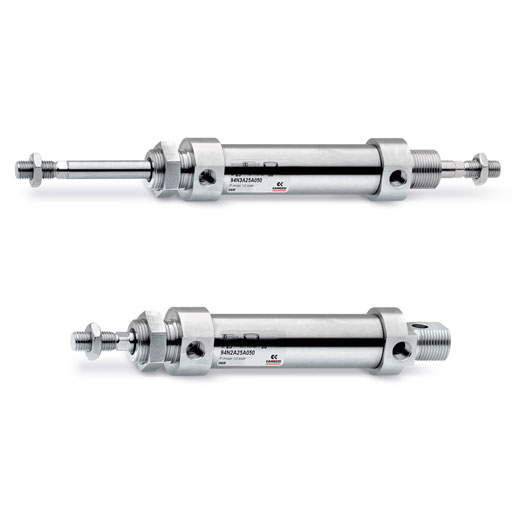
Stainless steel mini-cylinders Series 94 and 95
Single-acting and double-acting, magnetic
Series 94: ø 16, 20, 25 mm
Series 95: ø 25 mm, cushioned
The Series 94 and 95 cylinders can be used in critical applications in which a high corrosion resistance is required (for example off-shore, marine, food).
Their construction enables the replacement of all seals.
Series 95 is normally equipped with adjustable end-stroke cushioning by means of a screw on the end block.
In addition both Series 94 and 95 are equipped with a mechanical cushioning in order to make the impact of the piston less noisy as it reaches the end of the stroke.